
Wednesday, April 8, 2015

Beloved
Here is a clip from the film. I thought it could give those who have not seen the movie some type of visual of how Sethe and Beloved interactions were. In the beginning of the scene, Beloved asks Sethe why did she leave her. Sethe goes on to tell her about Schoolteacher and etc.

https://www.youtube.com/watch?v=zehVZ9iPtSY
https://www.youtube.com/watch?v=zehVZ9iPtSY
Absurdly Beloved
Reading Beloved makes me further consider seeing the black woman's plight in ways that I maybe had not previously because their stories are either not readily told or not told in their entirety. Sometimes, this can lead to distorted images of what "black people" or "black women" do. I think what often gets left out of the equation is the idea of absurdity and how there's no such thing as normalcy in the lives of black people which makes it difficult to make sense out of black life because a lot of it doesn't make sense. You can't make certain things add up because the math doesn't add up quite simply when it comes to black folks. I think Sethe embodies that notion more completely and perfectly than any other character in Beloved most of the time at her own expense, which makes it ridiculously difficult to ever trust or truly love anyone or anything else without some underlying selfish ulterior motive or some paranoia that someone else will hurt her again like they always had in her past, which drives every action she takes in the novel. It's easy to judge Sethe as immoral or unjust but hard to uncover how and why she got that way, which again shines the light on the absurdity in black life because she's seeking her justification for her actions in a certain series of unfortunate events that were caused by other outside sources that were in themselves unjustified to begin with. Infanticide of course is not the ideal way to resolve the problems in Sethe's life, but it's not like we're talking about Casey Anthony drowning her daughter in a swimming pool and tossing her body in the woods somewhere simply because she didn't want the responsibility of motherhood. Of course, that's about as absurd as it gets but the difference is Sethe felt rather than not fulfilling her duties as a mother in protecting her children from abuse, rape, hunger and thirst, homelessness, poverty, and many of the other atrocities directly and indirectly associated with the institution of slavery, she would rather kill them herself than allow them to suffer the same way as she had. Sethe is definitely the epitome of absurdity and while her morality is up for debate, what isn't debatable is the fact that she should never have felt that option-less or choice-less as a human being, a woman, a black woman, and a black mother. Therein lies the problem...
An Example of a Black Existential Feminist
Good afternoon all!
I have found two videos about a women that I believe is a true Black Existential Feminist. Her name is Beverly Guy-Sheftall. In the two videos that I've seen about this women, she has really shown that she is capable of holding the title of being a black feminist. So watch the two videos about Her Impact on helping black feminists and the other about Her Two Cents on the matter of the history of Black Feminism.
Thanks and enjoy your day!
I have found two videos about a women that I believe is a true Black Existential Feminist. Her name is Beverly Guy-Sheftall. In the two videos that I've seen about this women, she has really shown that she is capable of holding the title of being a black feminist. So watch the two videos about Her Impact on helping black feminists and the other about Her Two Cents on the matter of the history of Black Feminism.
Thanks and enjoy your day!
Margaret Garner
I'm sure many were wondering what the end result ended up being in the Margaret Garner case. I researched and found that Margaret and her husband were taken into custody and tried in what became one of the longest fugitive slave trials in history. "During the two week trial, abolitionist and lawyer, John Jolliffe, argued that Margaret’s trips to free territory in Cincinnati entitled her and her children to freedom. Although Jolliffe provided compelling arguments, the judge denied the Garners’ plea for freedom and returned them to Gaines. In a bid to gain freedom for Margaret and her children, Jolliffe convinced officials to arrest Margaret on the charge of murdering her daughter. Joliffe surmised that with a murder trail, Margaret would have another chance for freedom. Gaines caught on to Jolliffe’s plan and relocated the Garners to several different plantations before finally selling them to his brother in Arkansas. As a result, federal marshals were not able to serve Margaret with an arrest warrant and she never received a second trial. Margaret Garner died in 1858 from a typhoid epidemic."
Steven Weisenburger, Modern Madea: A Family Story of Slavery and Child-Murder from the Old South. New York: Hill and Wang, 1998; Weisenburger, Steven, “A Historical Margaret Garner,” http://www.motopera.org/mg_ed/educational/HS_HistoricalMGarner.html (accessed November 25, 2007).
Margaret's willingness to go to jail rather than to return back to her owners shows us again how desperate she was to escape the horrors of slavery. In the novel Morrison made plain to us the many absurdities that took place during slavery. Because of this we can empathize with Sethe and try not to judge her actions. She did what she felt was best for her and her children She did not want them to undergo the torture that she witnessed and experienced, and attempted to provide a better alternative; which was death.


Steven Weisenburger, Modern Madea: A Family Story of Slavery and Child-Murder from the Old South. New York: Hill and Wang, 1998; Weisenburger, Steven, “A Historical Margaret Garner,” http://www.motopera.org/mg_ed/educational/HS_HistoricalMGarner.html (accessed November 25, 2007).
Margaret's willingness to go to jail rather than to return back to her owners shows us again how desperate she was to escape the horrors of slavery. In the novel Morrison made plain to us the many absurdities that took place during slavery. Because of this we can empathize with Sethe and try not to judge her actions. She did what she felt was best for her and her children She did not want them to undergo the torture that she witnessed and experienced, and attempted to provide a better alternative; which was death.
Tuesday, April 7, 2015
Living in Absurdity: Slavery Tools: The Iron Bit
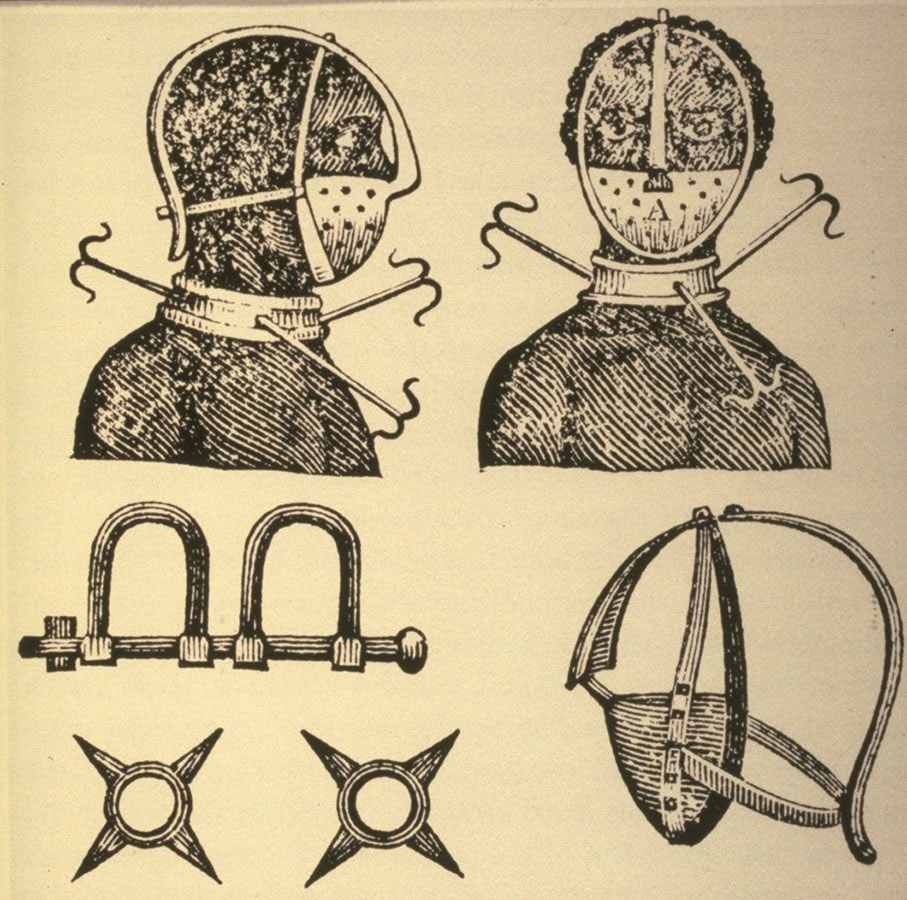
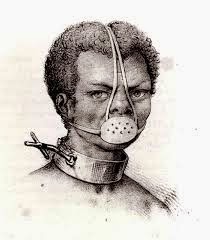

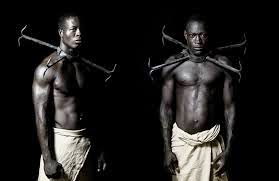
The iron slave bit that is mentioned in Beloved is
shown above. Thomas Branagan, the slave trader turned abolitionist describes
the iron bit: "through front and profile view of Superman's head, with
the mouth-piece and necklace, the hooks round which are placed to prevent an
escapee when pursued in the woods, and to hinder them from laying down the head
to procure rest." In the novel, this was the tool that prevented Paul D
from speaking to Halle and is a prime example of black people living in a world
of absurdity. Not only did this tool prevent the slave from speaking, but it
also prevented him from sleeping and eating.
Monday, April 6, 2015
"Because Of Them We Can"
https://www.youtube.com/watch?v=vN-3j0NW2p4
Hello guys watch the video it is on Eunique Jones Gibson acknowledging the importance of the people who paved the way for us in a positive light. She also addresses the importance of African American artist having a positive effect on young people in our society; I related this to previous discussions in class about African Americans helping each other grow as people.
Subscribe to:
Posts (Atom)